

Save $10k With This Marketing Advice
Imagine if someone offered to pay you $10k just to read an article. You’d probably find the time.
Unfortunately, no one pays us to avoid mistakes. We usually pay for them after they happen.
Hiring the wrong website or marketing agency rarely fails overnight. It happens slowly. Missed opportunities. Weak lead generation. Poor positioning. A website that looks nice but doesn’t grow the business.
This guide exists for one reason: To help you avoid paying tuition to the school of expensive mistakes.
The Most Expensive Mistakes Are the Ones You Don’t Recognize
“The cheapest website can become the most expensive one if it doesn’t help your business grow.” — Conrad Strabone, Founder & Chief Happiness Officer | e9digital
Businesses often know when they’ve overpaid. What they don’t recognize are the costs they never see.
This can include:
- Lost opportunities: Customers choose competitors before you even know they are looking.
- Months of delay: A failed website project often means starting over.
- Poor first impressions: Visitors decide quickly whether they trust your business.
- Weak lead generation: Beautiful websites don’t always generate inquiries.
- Internal frustration: Teams become discouraged when marketing doesn’t perform.
The biggest costs are often invisible. Retailers lose $2.6 billion annually due to slow websites;1 how much have you lost because your site takes more than three seconds to load?
Hiring an Agency Is Like Building a Skyscraper
Nobody starts building a skyscraper in NYC by choosing paint colors. They start with the foundation. The same applies to websites.
If you think of website design like a house, it would go like this:
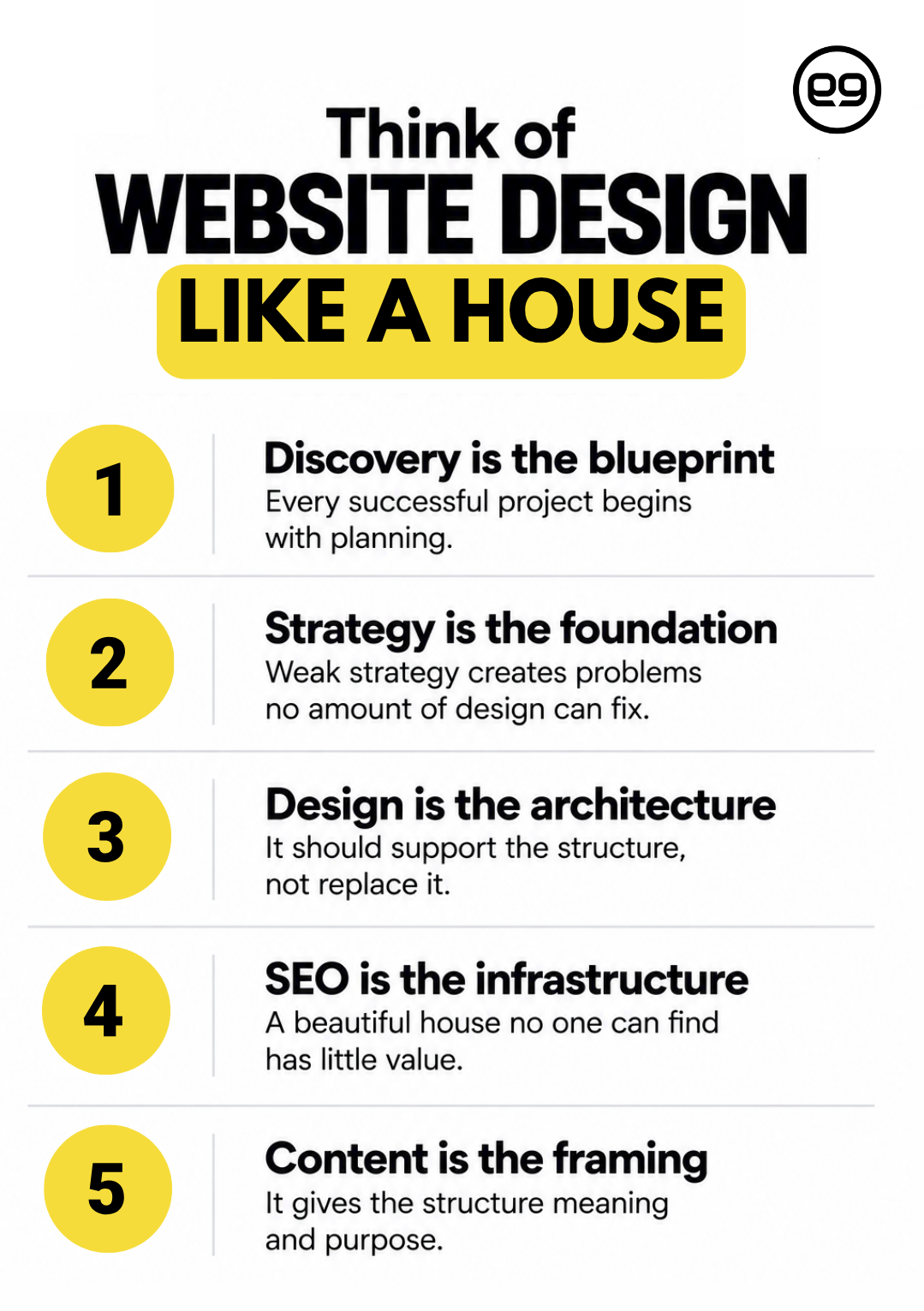
- Discovery is the blueprint: Every successful project begins with planning.
- Strategy is the foundation: Weak strategy creates problems no amount of design can fix.
- Design is the architecture: It should support the structure, not replace it.
- SEO is the infrastructure: A beautiful house no one can find has little value.
- Content is the framing: It gives the structure meaning and purpose.
If the foundation is wrong, everything built on top of it becomes more expensive to fix.
A Lot of Agencies Sell Better Than They Deliver
“You’re not really buying a website—you’re investing in a tool that should help generate leads, build trust, and make money.” — Conrad Strabone, Founder & Chief Happiness Officer | e9digital
Marketing agencies should be good marketers. That doesn’t necessarily mean they know how to create a website that will boost your sales. If every website looks exactly the same, if they can’t offer expertise unique to your situation, or if they tell you the timeline in the first meeting, then you may be in trouble.
An agency that’s good at sales often gives you:
- Beautiful presentations: Selling the vision is easier than executing it.
- Big promises: Results should be backed by proof, not confidence.
- Impressive jargon: Complexity doesn’t equal expertise.
- Fast timelines: Speed should never replace strategy.
- Generic proposals: Cookie-cutter recommendations often lead to cookie-cutter results.
Buying the sales pitch isn’t the same as buying success. You need to know how to hire a website agency that has skin in the game. All the services that an agency sells you, they should be doing themselves.
What You’re Really Buying
Businesses think they’re buying a website, SEO, branding, or advertising. But in reality, they’re buying outcomes that will help their business thrive.
When you work with an agency with two decades of experience like e9digital, you’re buying:
- Strategic thinking: Better decisions before work begins.
- Problem-solving: Solutions tailored to your business.
- Outside perspective: Fresh eyes reveal opportunities you may overlook.
- Business growth: Every recommendation should support measurable goals.
- Confidence: Knowing your investment is working toward something meaningful.
The deliverables are simply tools. The outcomes that they deliver are what matter.
This Guide Is Really About Risk
The best investments aren’t just about creating opportunity. They’re about reducing risk, ensuring that you always get the maximum value out of the money you spend on marketing. This guide helps businesses avoid:
- Hiring the wrong partner: Poor decisions often have long-term consequences.
- Wasting marketing budgets: Strategy helps investments produce better returns.
- Building the wrong website: A site that looks good but doesn’t perform.
- Choosing based on price alone: The cheapest option often becomes the most expensive.
- Confusing activity with progress: More work doesn’t always mean better results.
Knowledge reduces expensive mistakes, like how small businesses waste about 25% of their marketing budget on average.2
6 Questions Every Business Should Ask Before Hiring an Agency
Before you ever agree to work with an agency, catch important red flags by asking these six questions.
1. How do you develop strategy before you begin designing?
The strongest agencies start by learning how your business works. That includes your goals, customers, competitors, positioning, and current challenges.
Ask what their discovery process looks like and how those findings influence the website strategy. Their recommendations should have a clear reason behind them.
2. Can you show me measurable results, not just beautiful work?
A strong portfolio shows design ability. Case studies can tell you whether that work produced meaningful business results.
Ask for examples tied to measurable outcomes such as leads, conversions, search visibility, engagement, or revenue. The agency should be able to explain what changed and how they measured it.
3. How do you know if a project is successful?
This is one of the most important questions to ask. Launching the website should not be the only measure of success. The agency should establish clear goals before the project begins.
Ask which metrics they plan to track and how those metrics connect to your business objectives. You should know what success looks like before design starts.
4. What happens if something isn’t working?
Websites often need adjustments after launch as real performance data becomes available.
Ask how the agency evaluates results, identifies problems, and recommends improvements. A strong partner should have a clear process for reviewing performance and deciding what should be tested, updated, or improved.
5. How will this investment help my business grow?
Every major recommendation should connect to a business objective.
Ask the agency to explain how its proposed strategy supports goals such as generating leads, improving conversions, increasing visibility, or supporting sales. You should understand what each investment is intended to accomplish before approving it.
6. Why should I trust your recommendations?
A good agency should be able to support its recommendations with relevant experience and evidence.
Look for case studies, measurable results, client reviews, long-term relationships, and a clearly defined process. You should understand how the agency reached its recommendation, not simply be expected to accept it.
Signs You’re About to Make an Expensive Mistake
While it can be hard to assess if an agency is worth its weight in gold, watching for red flags like these can help:
- The agency talks more than it listens: Great recommendations begin with understanding your business.
- Everything sounds too easy: Growth almost always requires thoughtful strategy.
- Price is the primary deciding factor: Value matters far more than the lowest proposal.
- No one asks difficult questions: Discovery reveals opportunities and prevents mistakes.
- The proposal looks generic: Strong agencies tailor recommendations to your business.
- The conversation is all about deliverables: Outcomes should always come before outputs.
- You’re making the decision quickly: Important investments deserve thoughtful evaluation.
The Best Marketing Investment Starts Before You Spend a Dollar
No one can guarantee you’ll choose the perfect agency. But you can dramatically improve your odds by asking better questions, understanding what creates results, and recognizing the difference between a vendor and a true strategic partner before you spend 10k.
At e9digital, we believe the most valuable part of any project happens before design begins. Through discovery, strategy, and honest conversations, we help businesses avoid costly mistakes and build marketing that supports long-term growth.
Our clients have seen:
- A 203% increase in website sessions
- A 50% increase in traffic
- A 44% increase in unique website users
The smartest investment isn’t simply building a better website. It’s making better decisions from the start.
Frequently Asked Questions
Why is choosing the right marketing agency such an important decision?
A marketing agency influences your brand, website, lead generation, customer experience, and long-term growth. The right partner can accelerate your business, while the wrong one can create costly setbacks.
How can hiring the wrong agency cost my business money?
Poor strategy, weak messaging, ineffective SEO, low conversion rates, and failed website projects can all result in lost leads, missed revenue, and the expense of rebuilding later.
What should I evaluate before hiring a web design or marketing company?
Look beyond design and pricing. Evaluate their discovery process, strategic thinking, measurable results, case studies, reviews, communication style, and long-term client relationships.
Why is discovery so important before building a website?
Discovery helps uncover your goals, customers, competitors, and unique strengths. Without it, websites are often built on assumptions instead of strategy.
Can a website really become a revenue-generating asset?
Yes. When built strategically, a website can attract qualified visitors, build trust, generate leads, and support your sales process around the clock.
What’s the biggest lesson from this guide?
The most expensive marketing mistakes usually happen before the first page is designed. Choosing the right partner—and asking the right questions—can save your business far more than the cost of the project itself.